
Alpine Ice Caves
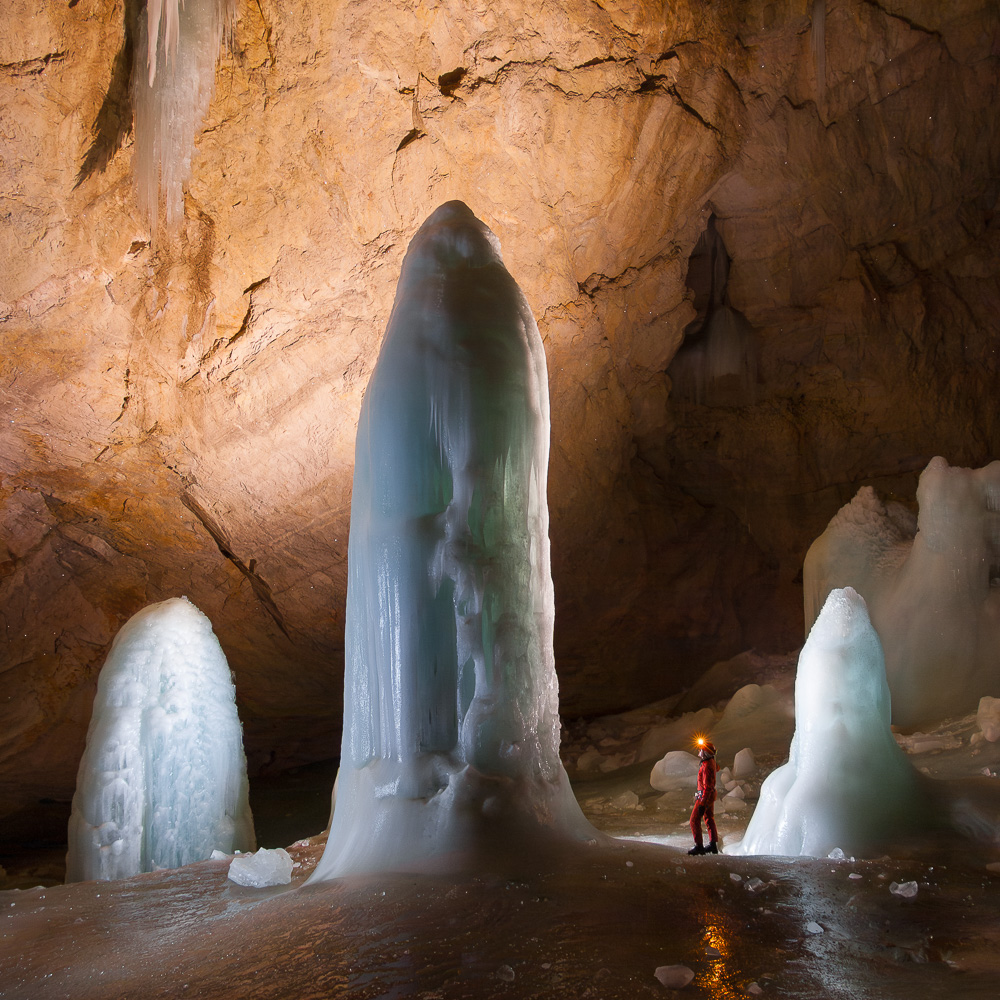
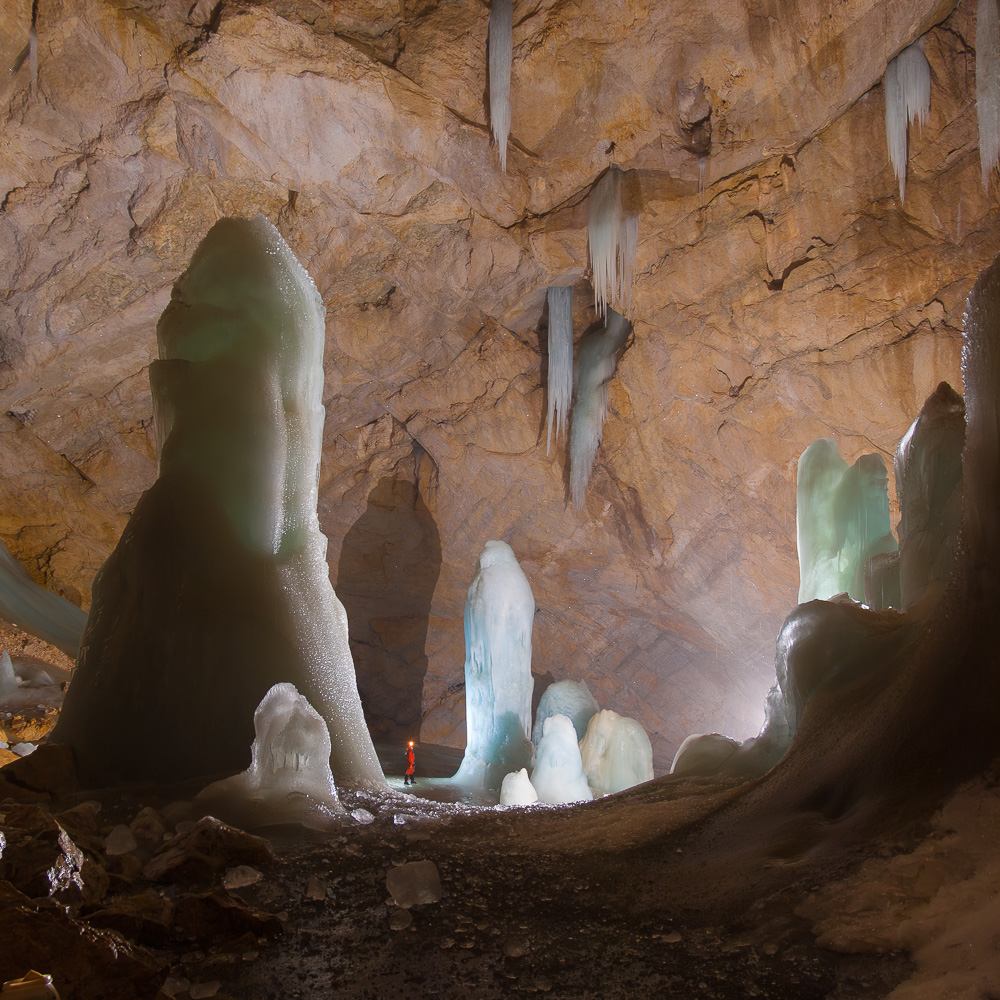
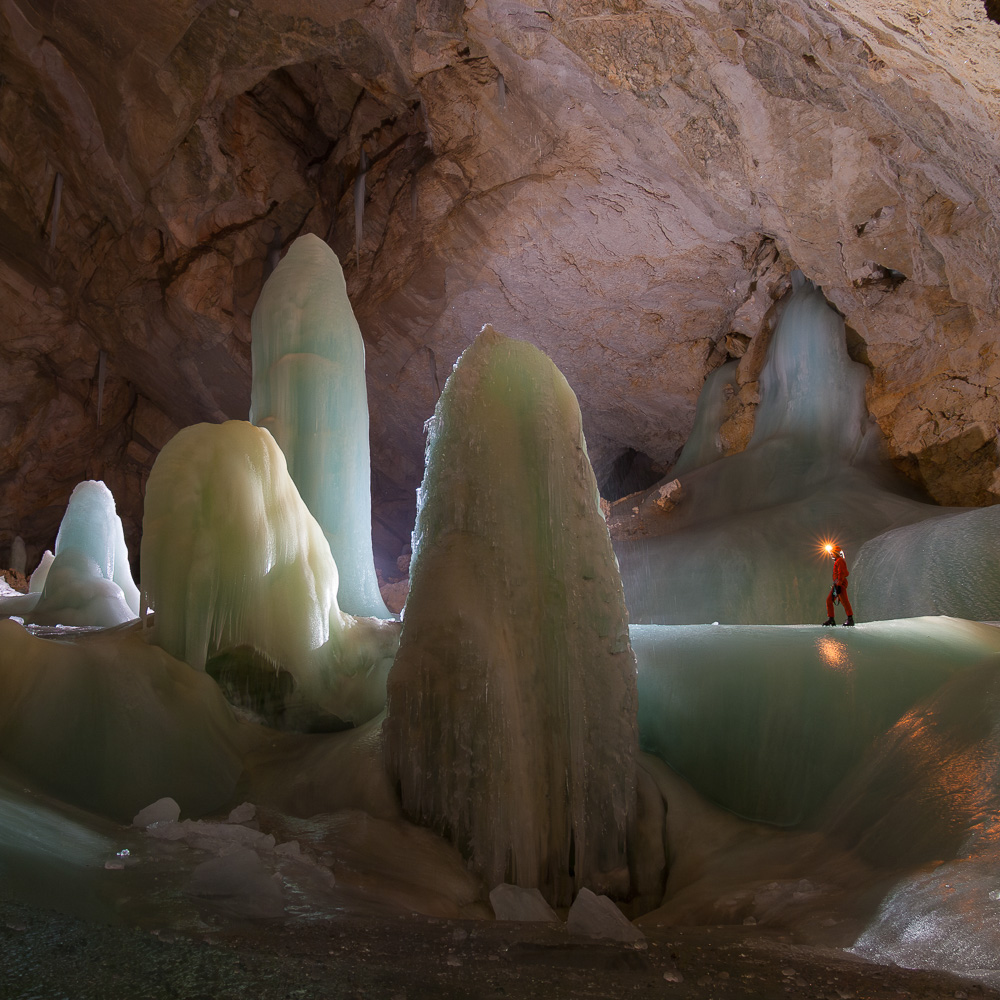
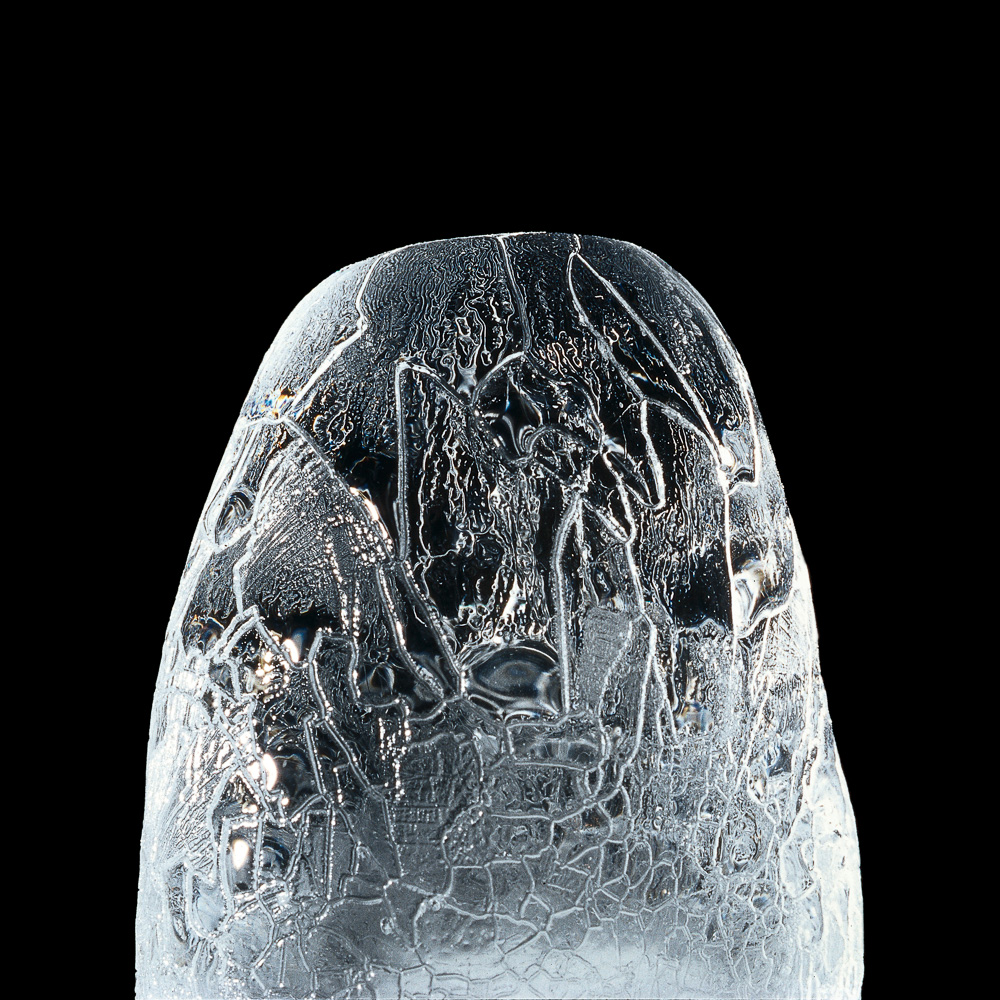
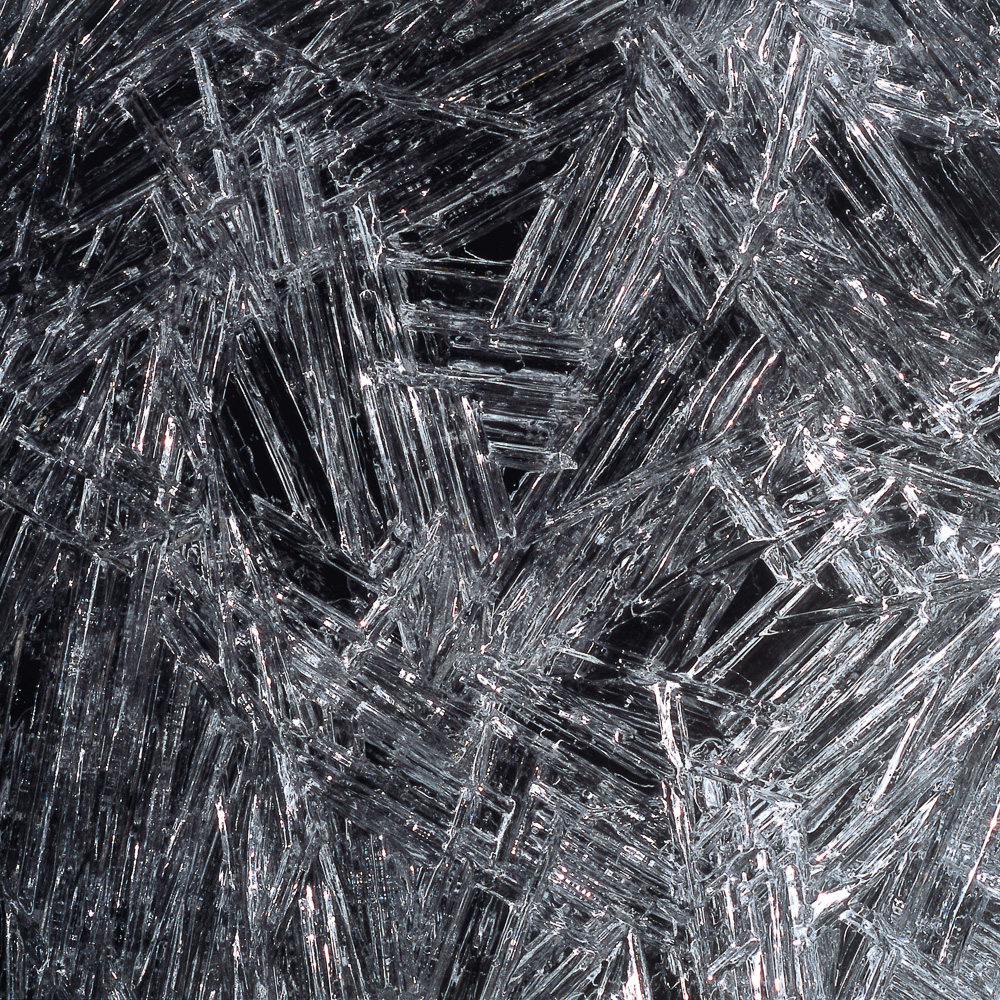
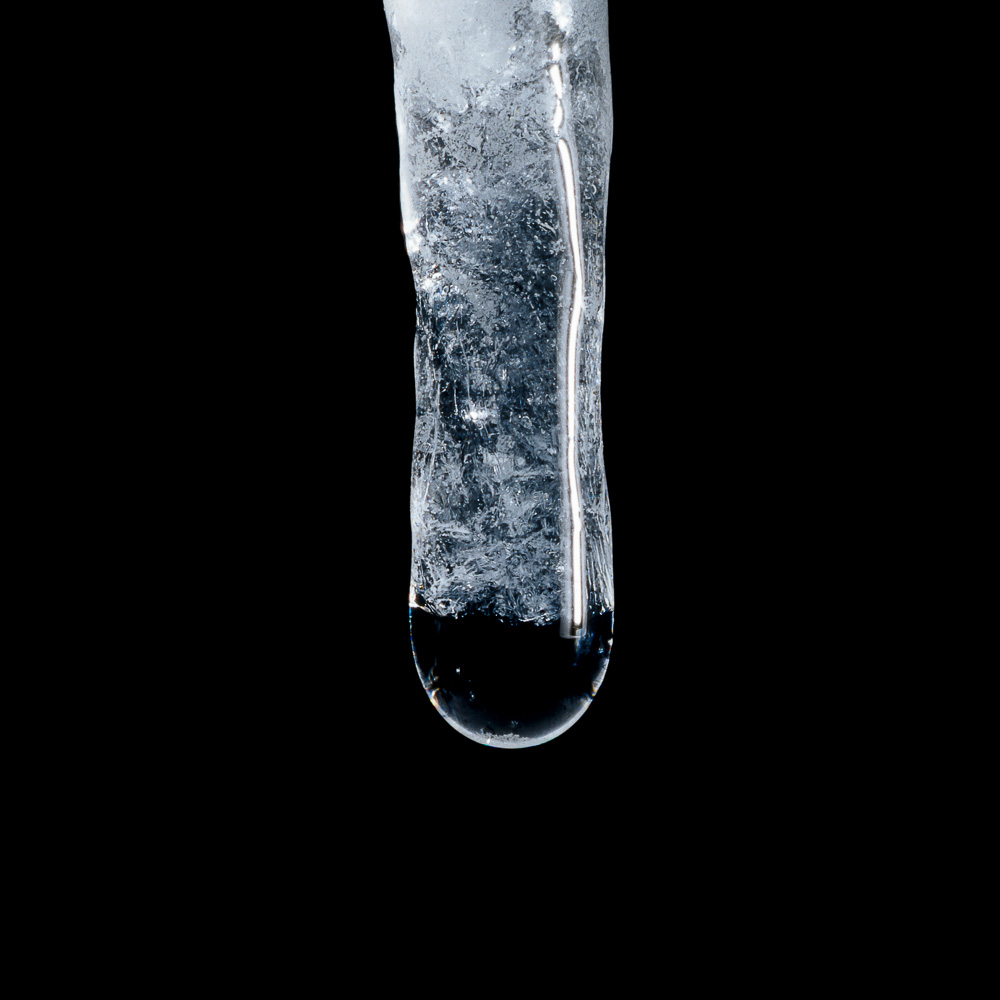
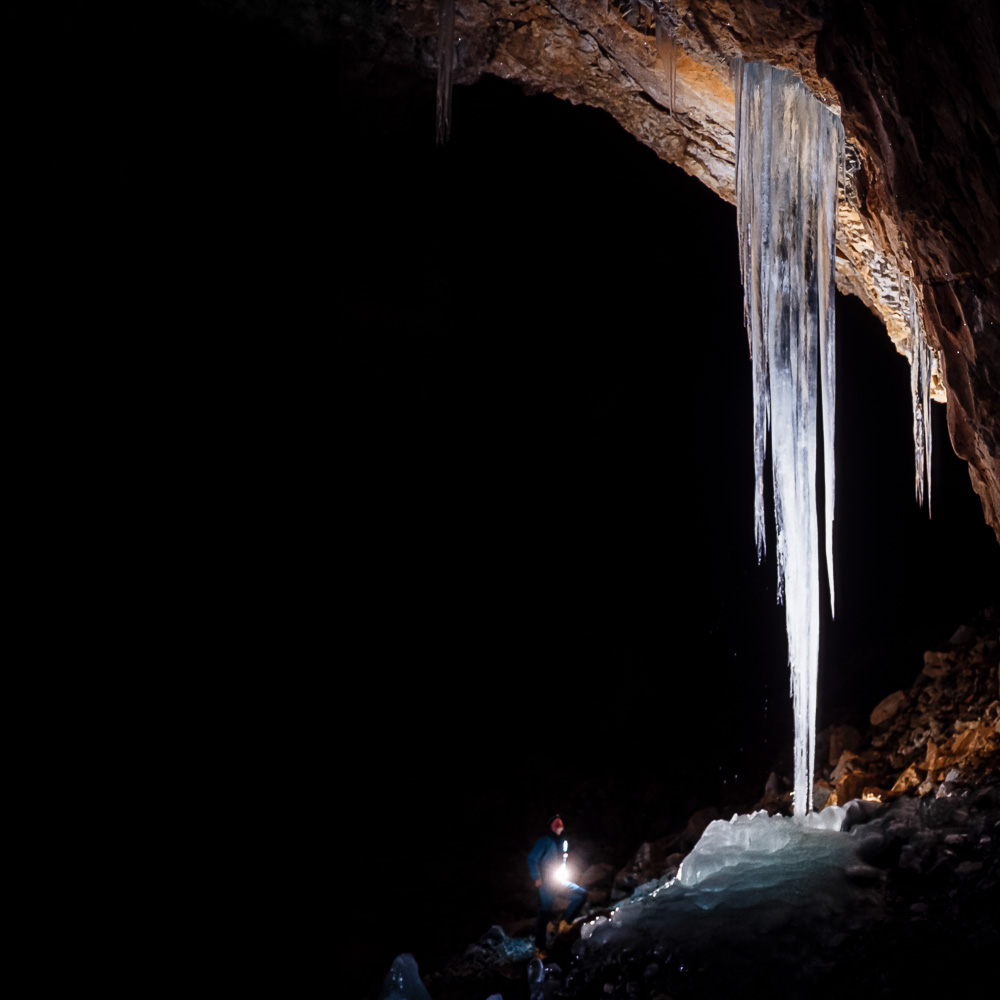
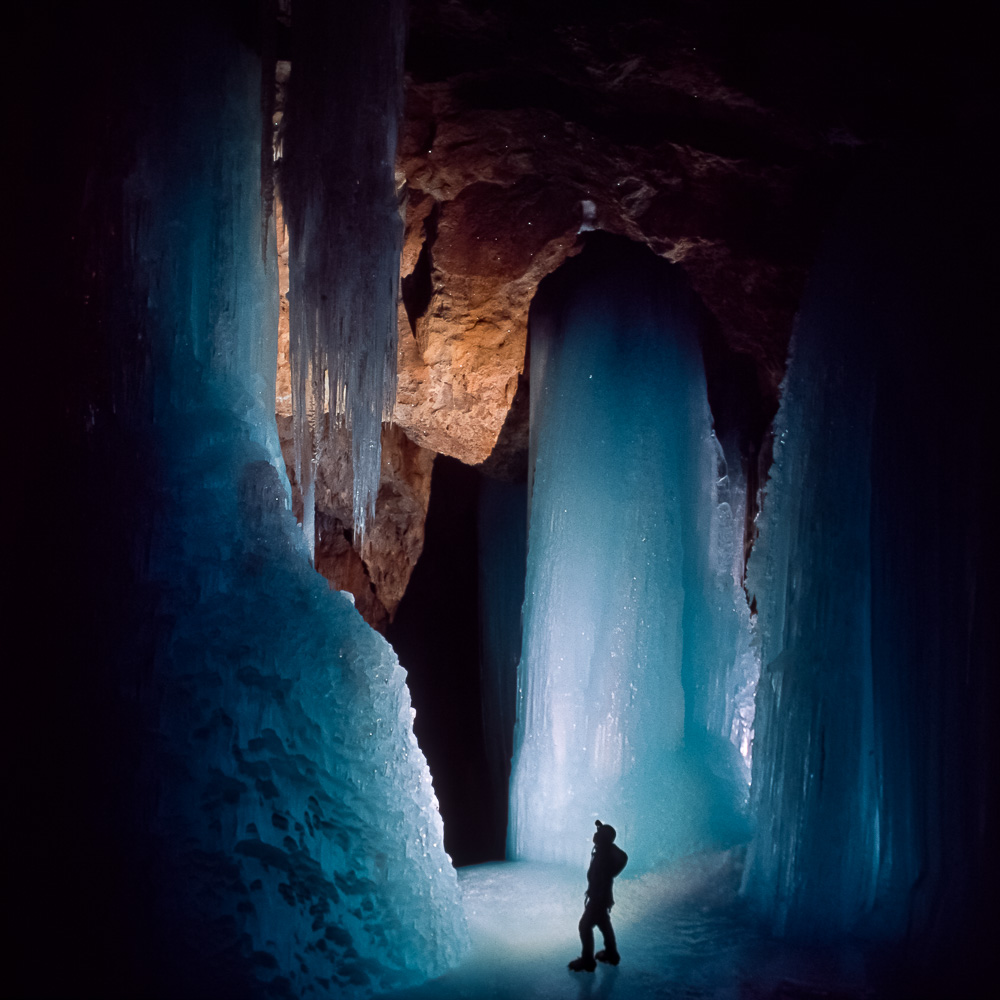
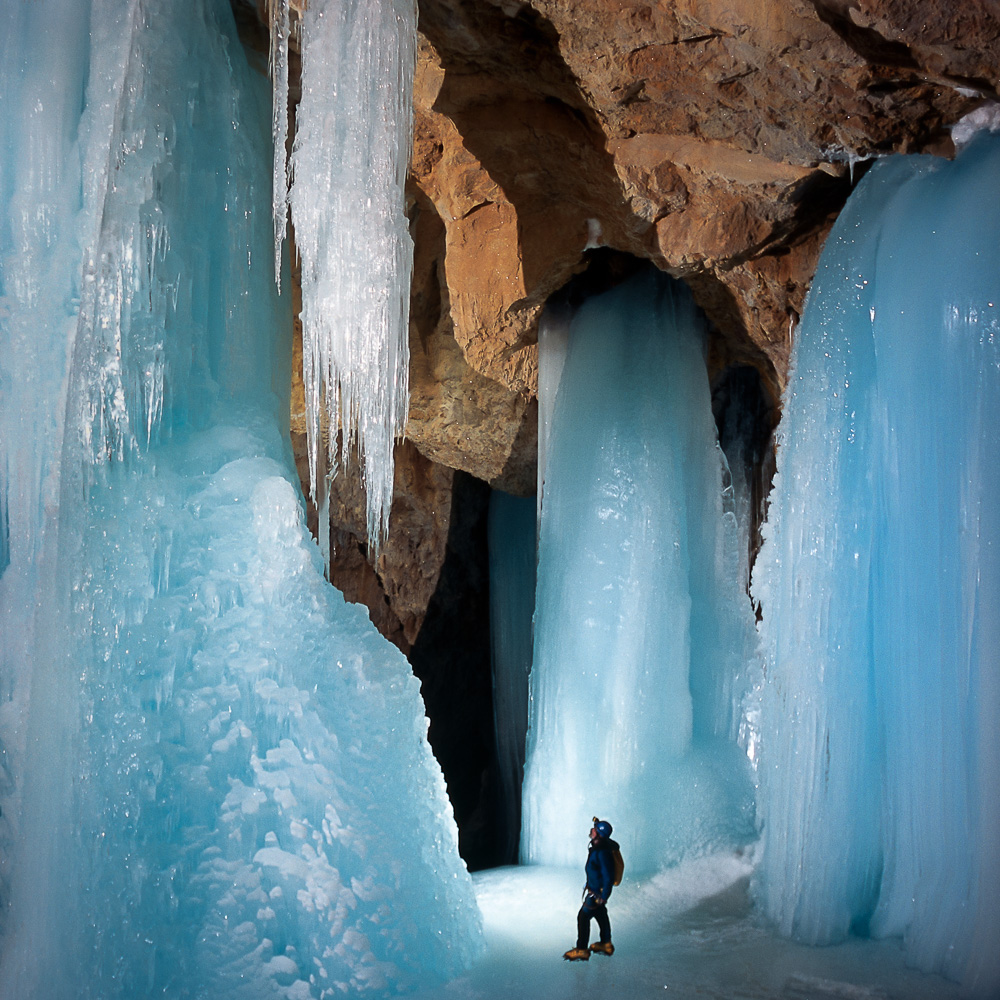
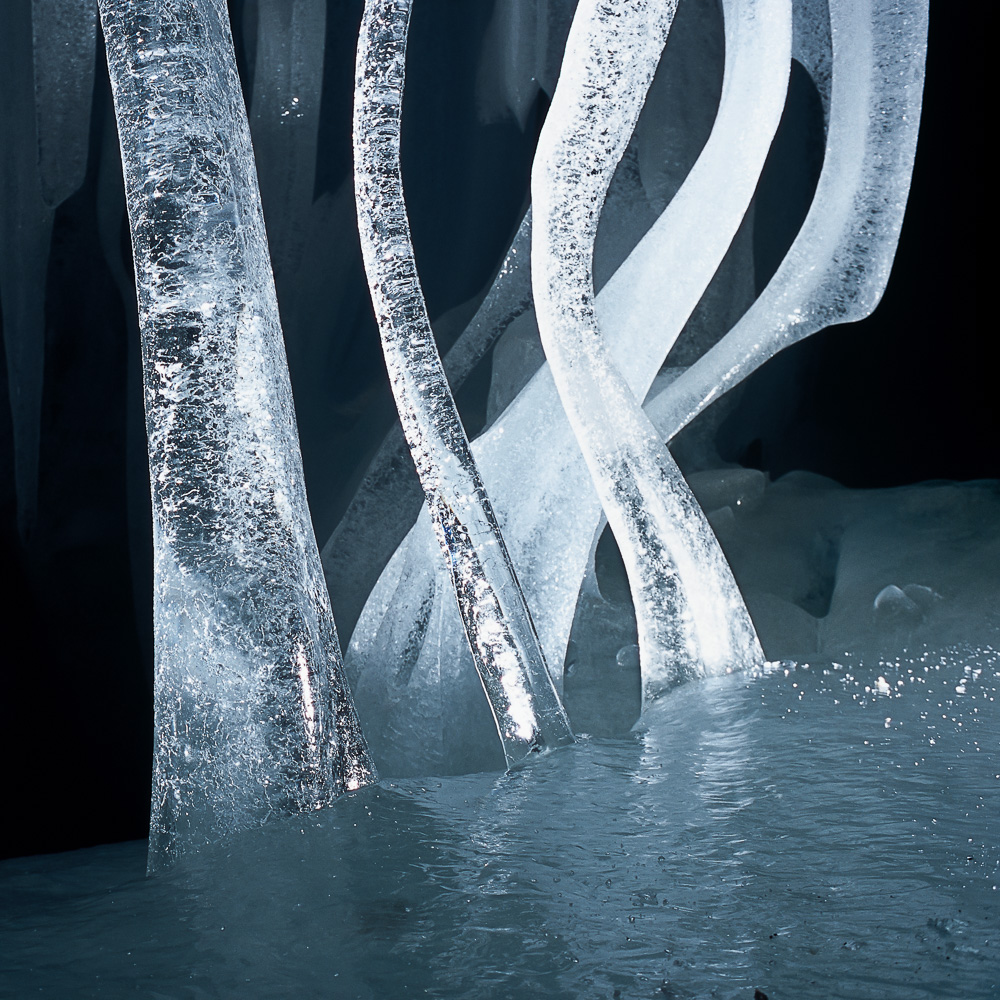
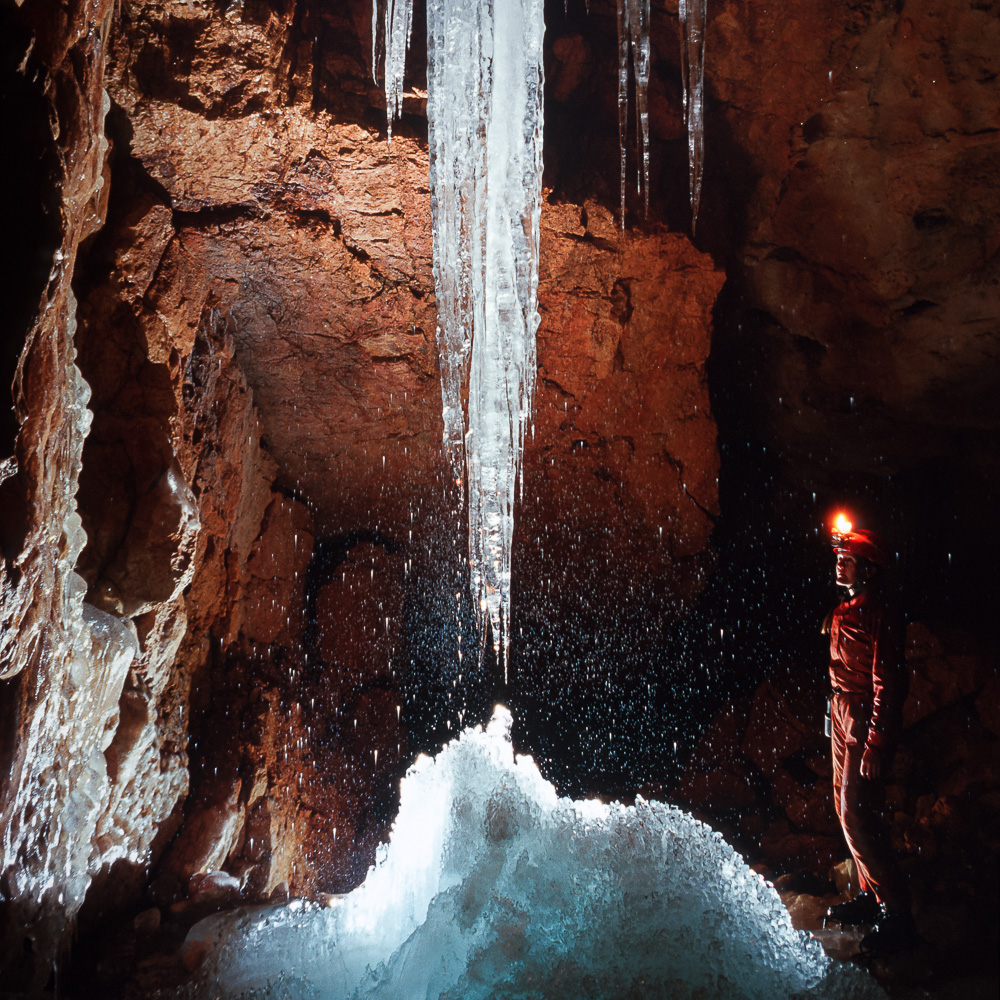
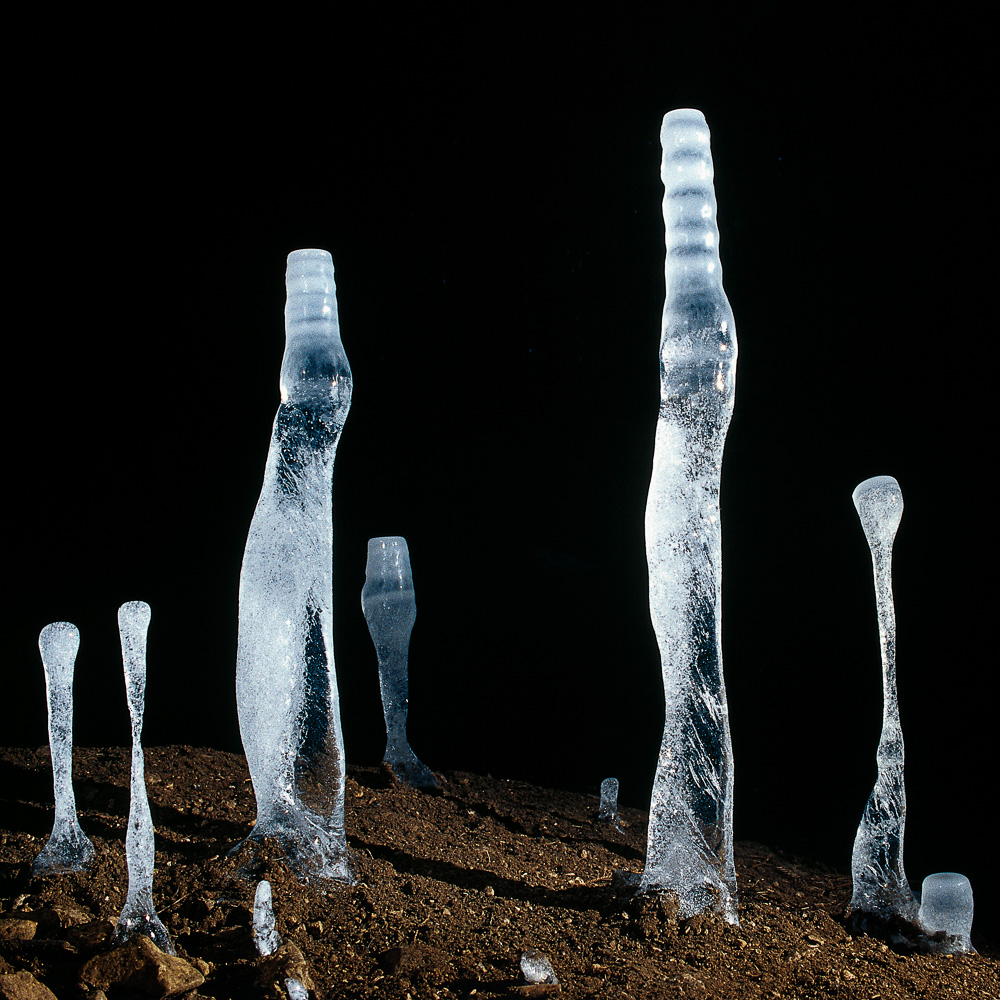
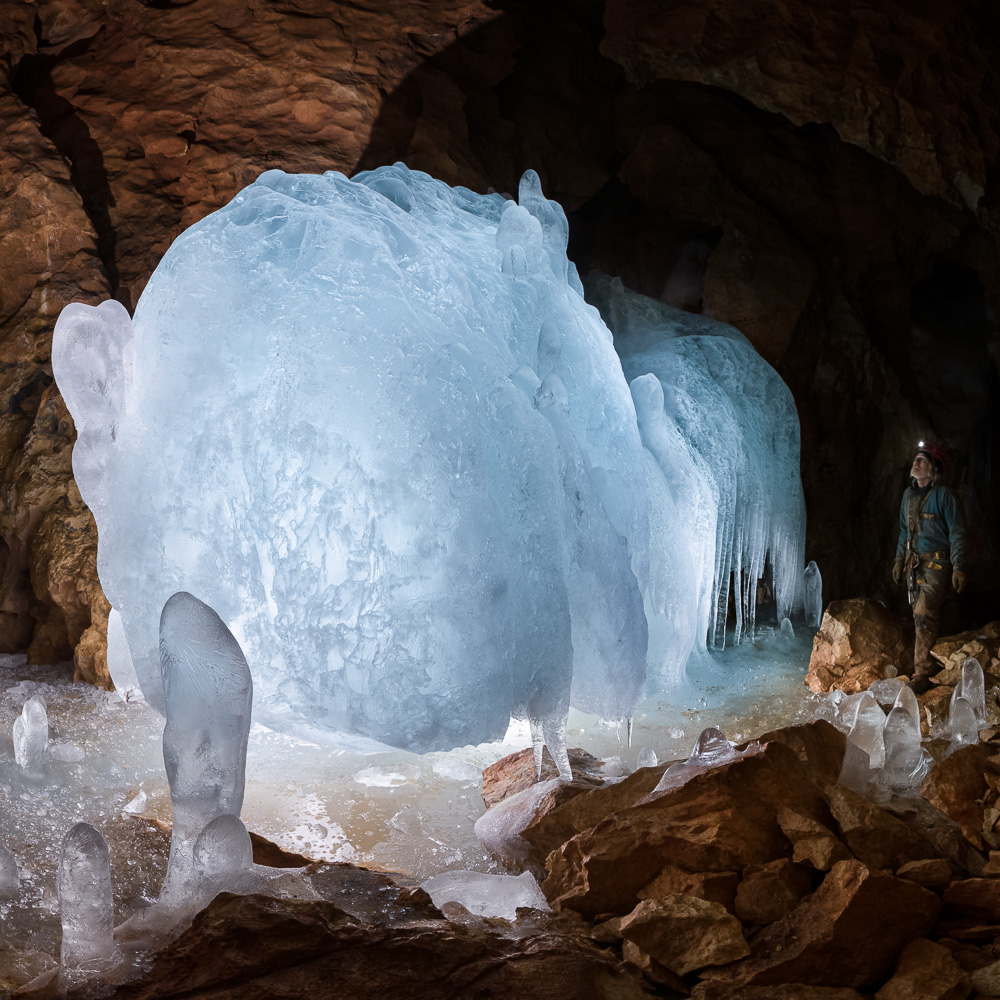
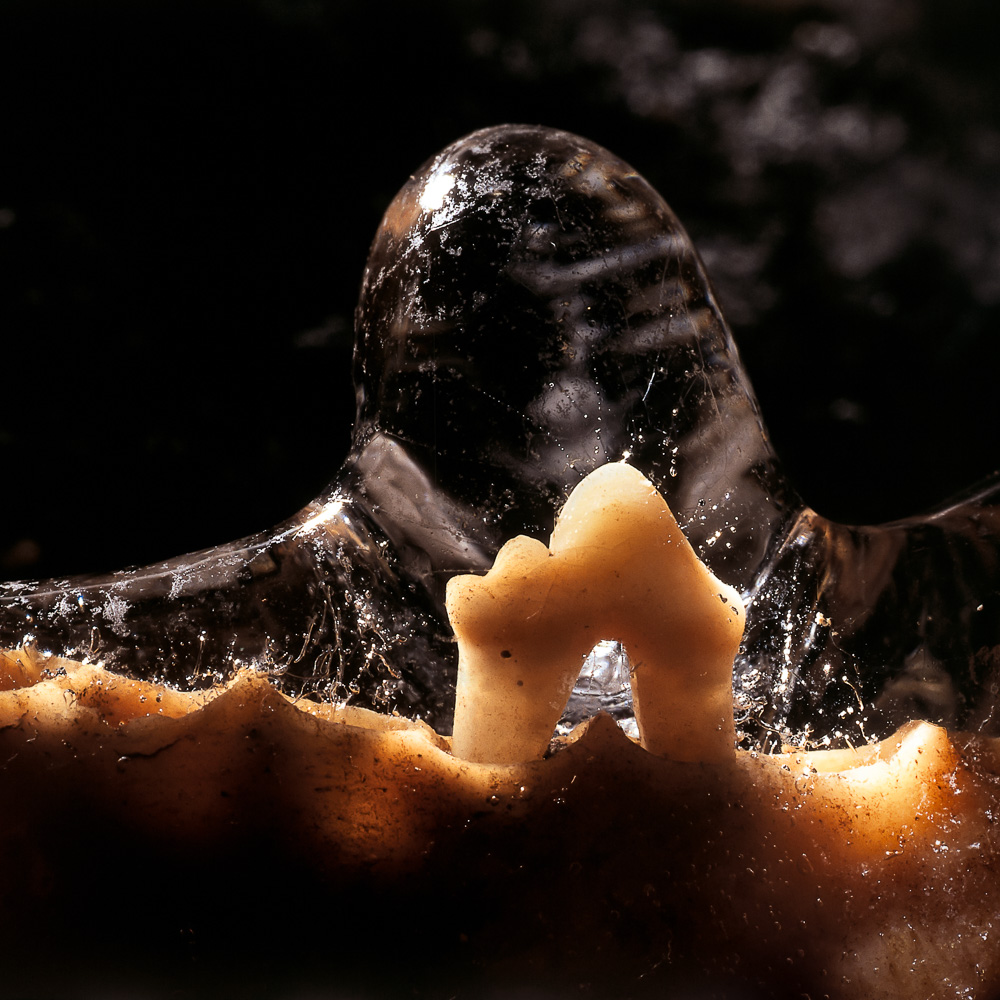
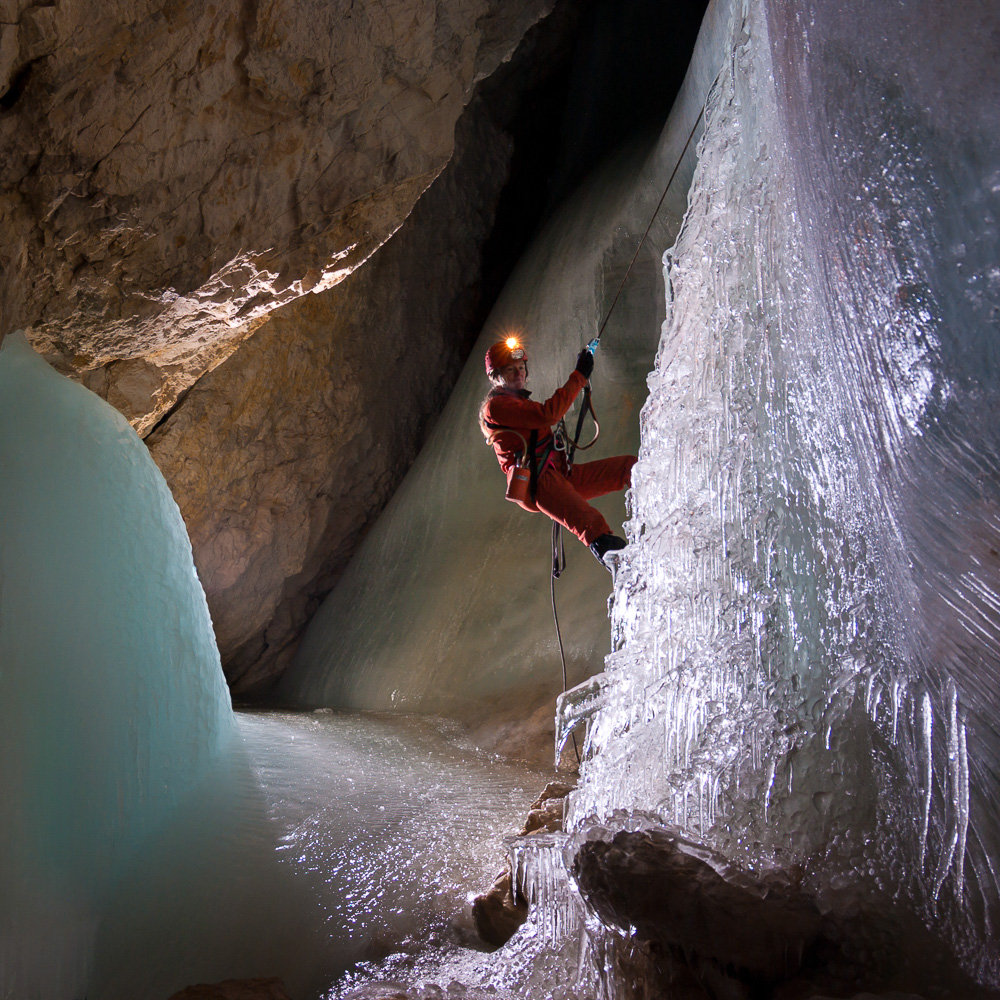
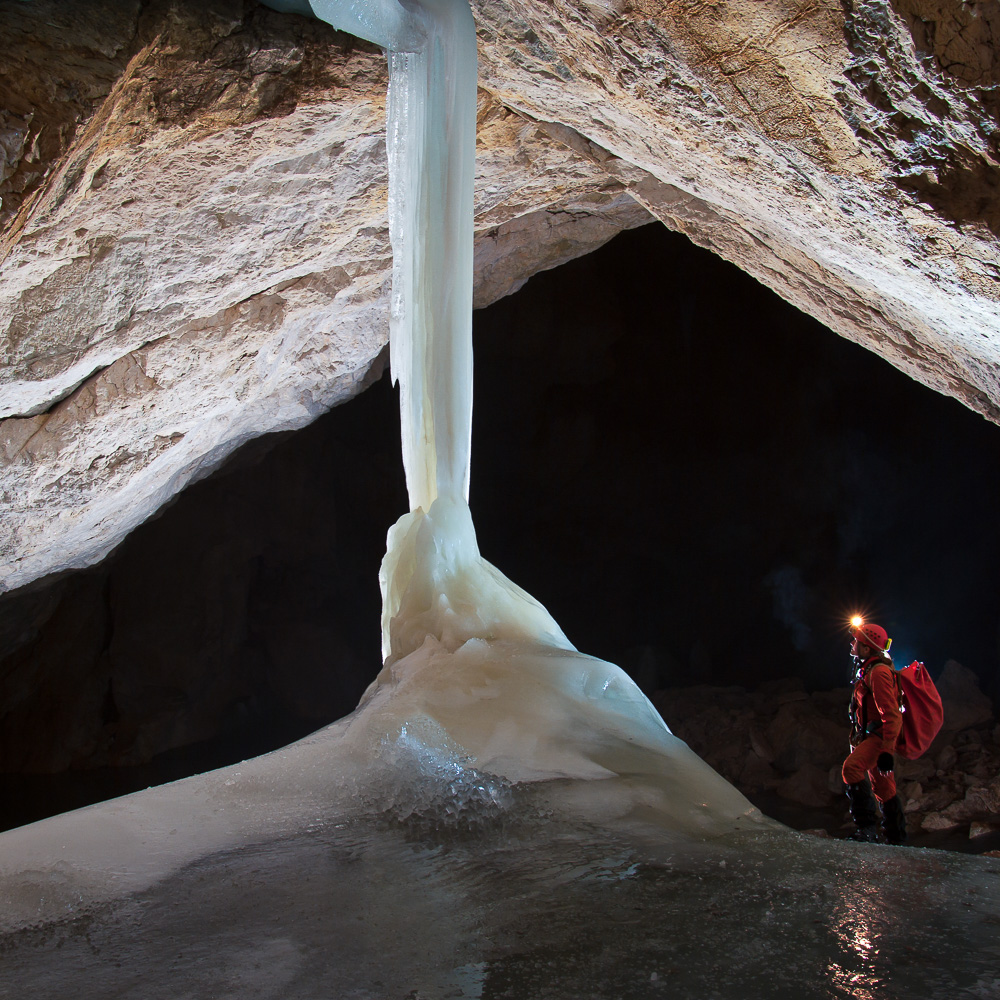
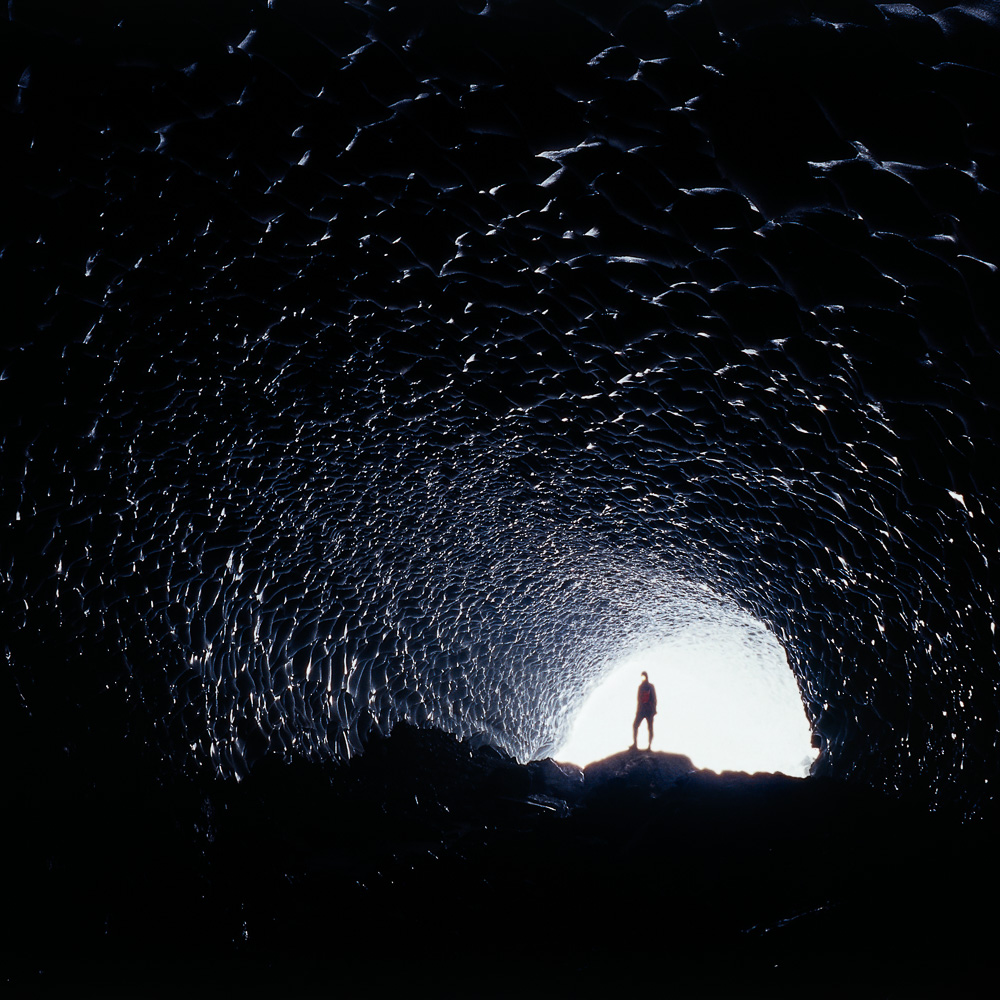
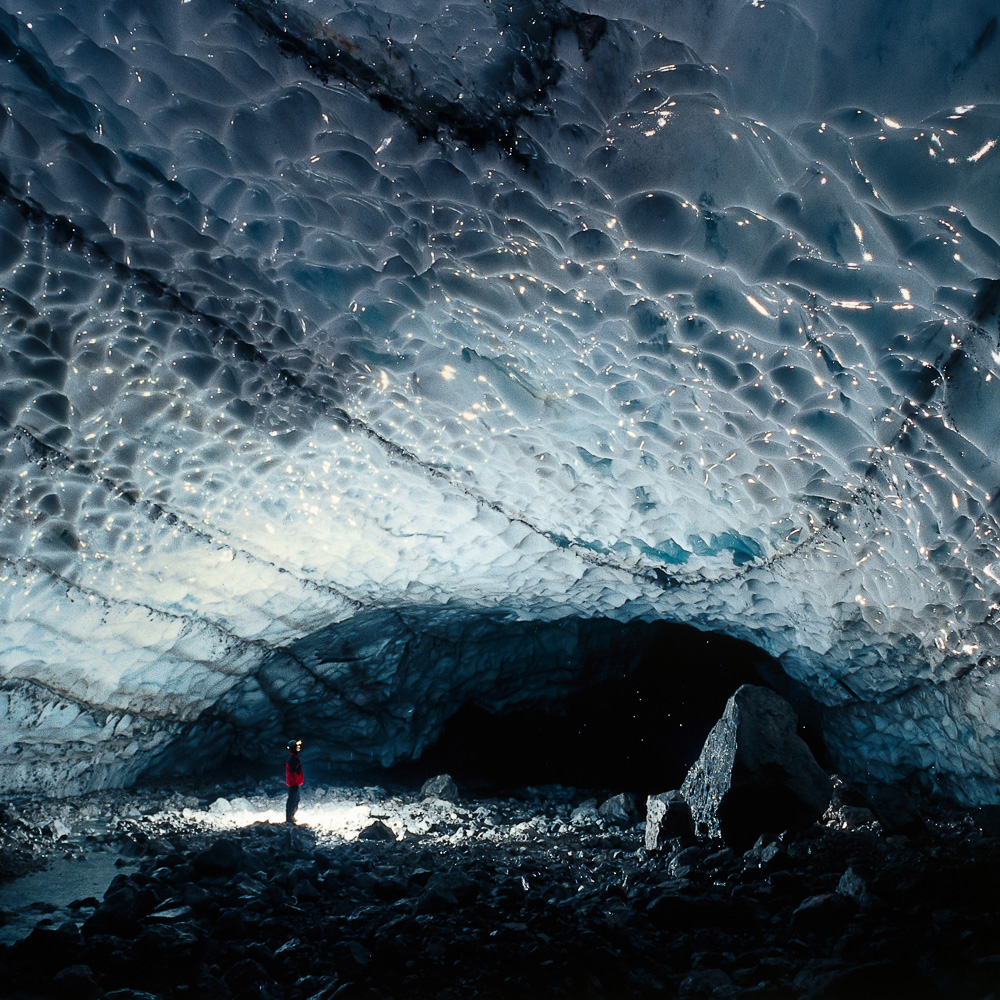
In freezing temperatures, water dripping from the cave ceiling crystallises into ice formations that resemble those formed from dissolved limestone, such as stalagmites, stalactites, draperies, and even helictites. During cold spells in winter, we can thus observe time-lapse dripstone formation in cave entrances – a transient decoration that vanishes as soon as temperatures rise again. In high Alpine caves, in contrast, where temperatures remain below freezing for most of the year, ice builds up into huge domes and frozen cascades that shimmer deep blue. A different type of ice cave is formed in glaciers by meltwater runoff. Most Alpine ice caves have one thing in common: their appearance changes depending on the season, and the ice is sharply declining due to global warming.
Back to portfolios ...